Cold-Weather Brake Chambers: Prevent Winter Failures
Learn why brake chambers fail in extreme cold and how to spec chambers that survive -40°F winters without cracking diaphragms or freezing parking brakes.
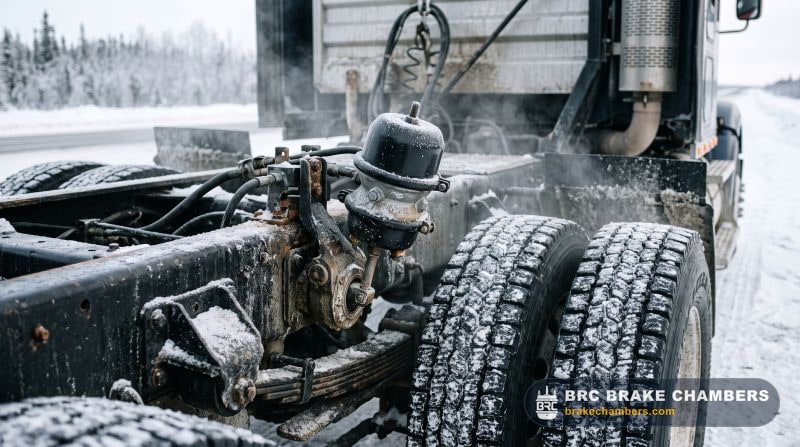
Extreme cold is one of the most punishing environments for commercial air brake systems. In temperatures below -20°F (-29°C), standard rubber diaphragms lose elasticity, center seals harden, and moisture inside air lines freezes, leading to brake failures, out-of-service violations, and costly roadside repairs.
This guide covers why cold weather causes brake chamber failures and how to spec chambers that perform reliably in Arctic and sub-zero climates.
Why Brake Chambers Fail in Extreme Cold
Three failure modes dominate cold-weather brake chamber performance.
1. Diaphragm Cracking
Standard rubber diaphragms are formulated to remain flexible across a normal operating range. Below -20°F (-29°C), that flexibility drops sharply. The diaphragm becomes brittle, and the repeated flexing of normal brake application causes small cracks to form at the diaphragm edge or center.
Once cracked, the diaphragm leaks air. The brake loses force, the parking brake may not release, and the chamber fails.
2. Center Seal Hardening
The center seal separates the service side and parking side of a spring brake chamber. In cold weather, standard rubber compounds in the center seal harden, allowing air to bypass between sections. This causes both brake fade and unexpected parking brake engagement.
3. Internal Ice Formation
Moisture is always present in compressed air systems. In cold weather, that moisture condenses and freezes inside the chamber, jamming the push-rod, freezing the diaphragm in place, or blocking the exhaust port.
What to Look For in Cold-Weather Brake Chambers
Not all aftermarket brake chambers are built for Arctic conditions. Here is what to verify before specifying chambers for cold-weather fleets:
- Cold-Rated Diaphragm Compounds: Look for neoprene or specialty rubber compounds rated to -40°F or below.
- Extreme-Temperature Center Seals: Higher-grade rubber or silicone compounds that maintain flexibility in sub-zero temperatures.
- Sealed Push-Rod Boots: Prevents moisture ingress that causes internal ice formation.
- E-Coated Internal Springs: Prevents rust flaking that binds springs in cold weather.
- Breather Design: Check that the chamber breather allows dry air to enter and exit without trapping moisture.
Fleet Best Practices for Cold-Weather Brake Reliability
Even with cold-rated chambers, fleet maintenance practices matter in winter.
- Air Dryer Maintenance: Replace desiccant annually before winter to reduce moisture entering the system.
- Alcohol Evaporators: Use air-line antifreeze systems where permitted.
- Daily Drain: Drain air tanks daily in cold weather to remove condensation.
- Chamber Inspection: Inspect chambers every 30 days during winter for signs of freezing or cracking.
- Pre-Winter Replacement: Replace any chamber showing cracking, weeping, or stretched boot before winter.
When to Replace vs. Rebuild
In cold weather, the failure modes are often catastrophic. A cracked diaphragm means the chamber is dead and must be replaced. Cold weather does not allow for spring deferrals.
If a chamber shows any of these signs, replace it immediately:
- Cracked diaphragm visible through exhaust port
- Push-rod stroke exceeding adjustment limit
- Frozen or sluggish brake release
- Visible moisture inside the chamber
Summary
Cold-weather brake chamber reliability comes down to three things:
- Spec chambers with cold-rated diaphragms and seals
- Maintain the air system to prevent moisture ingress
- Replace failing chambers before winter, not during
BRC manufactures cold-rated brake chambers for Arctic and sub-zero commercial vehicle applications. Contact our engineering team to discuss your fleet's cold-weather specifications.
Related Resources:
→ View our spring brake chambers
→ See brake chamber installation guide
→ Contact BRC Engineering
Share Article
Need Technical Help?
Our engineering team is available to help you cross-reference OEM parts or select the correct chamber for your fleet.