
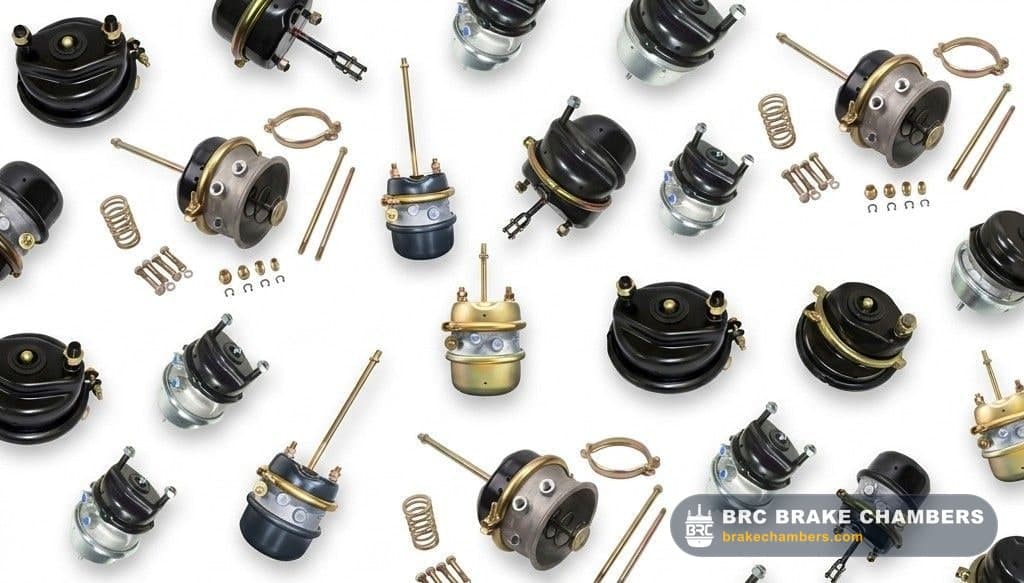
Brake Chamber R&D: Engineering the Next Generation of Air Brake Chambers
BRC's in-house R&D team combines advanced CAD modeling, FEA simulation, rapid prototyping, and metallurgical science to engineer heavy-duty brake chambers. Every design is validated before it reaches the production line.
How BRC Engineers Brake Chambers
Our engineering team works across mechanical design, materials science, and manufacturing technology. From lightweight high-strength steel housings to proprietary rubber compounds rated for extreme temperatures, we control the design variables that determine how a brake chamber performs in the field.
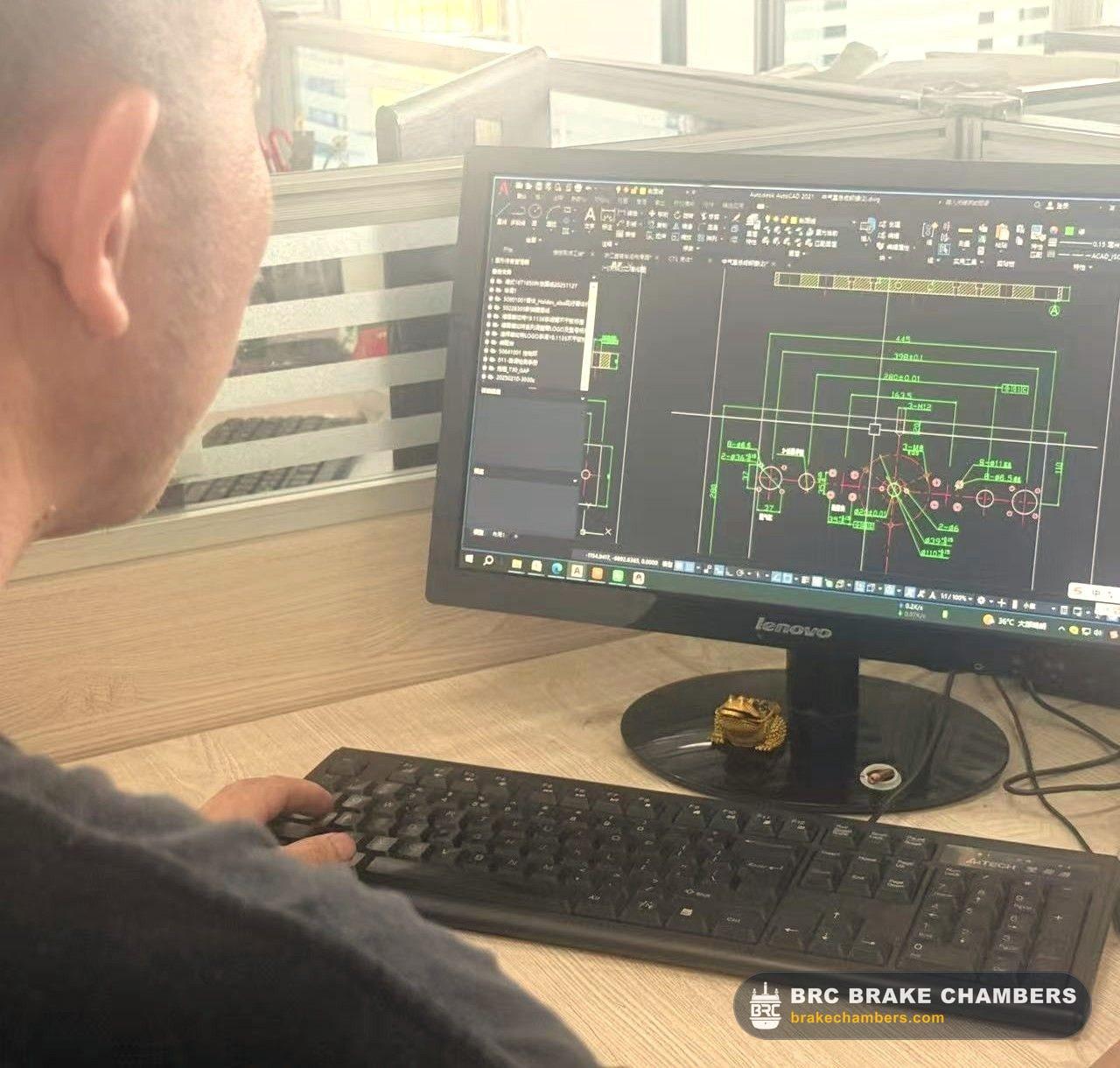
3D CAD Modeling & Design
Every new BRC brake chamber begins as a parametric 3D CAD model. Our engineers iterate housing wall thickness, diaphragm geometry, push-rod stroke length, and port location digitally, before any physical tooling is cut. This reduces tooling cost and shortens development time.
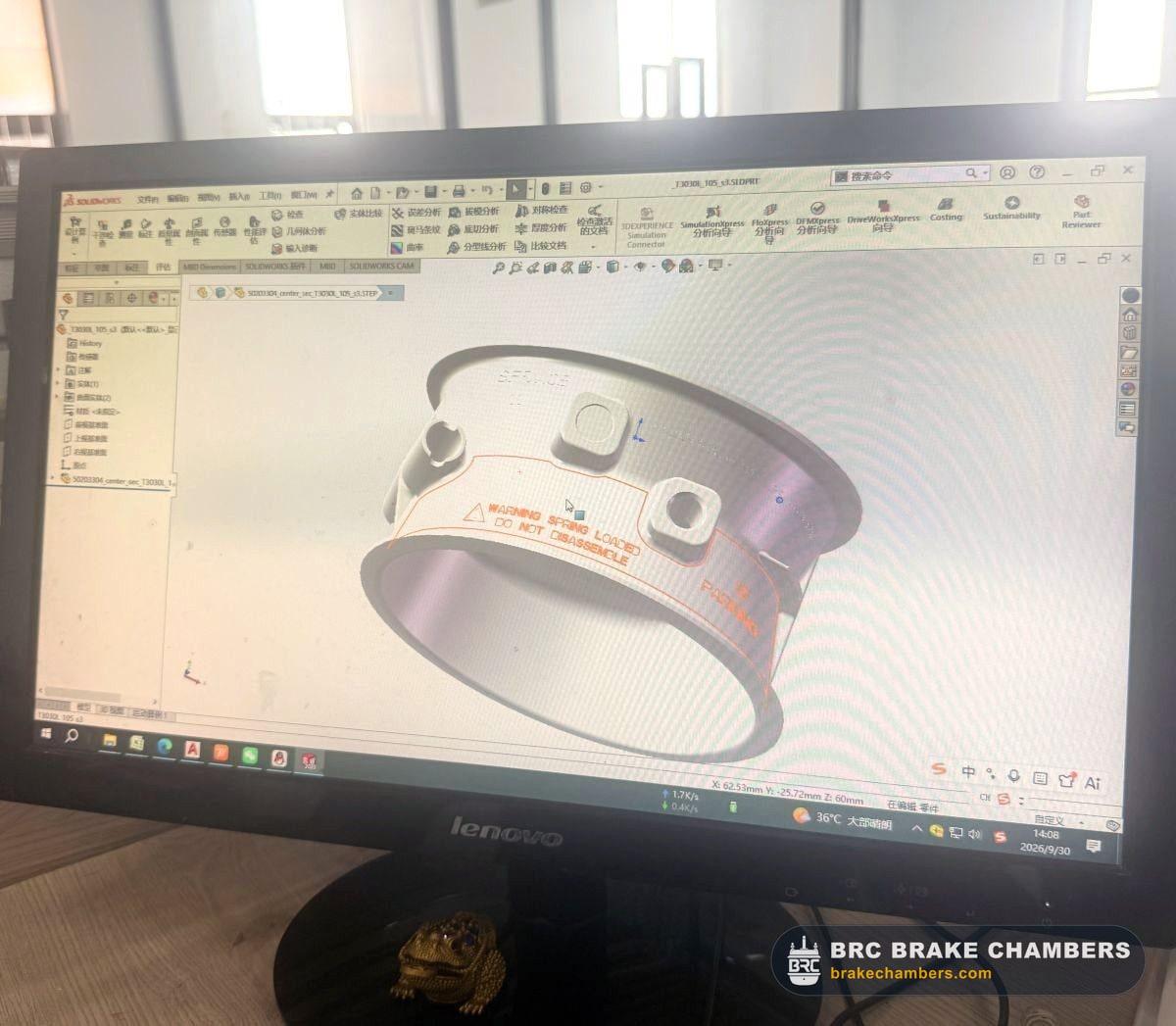
Finite Element Analysis (FEA)
We digitally simulate real-world brake chamber operating conditions: pneumatic burst pressure, torsional vibration from rough roads, and -40°F thermal shock, to identify stress concentrations before a physical prototype is built. Every BRC design is FEA-validated.
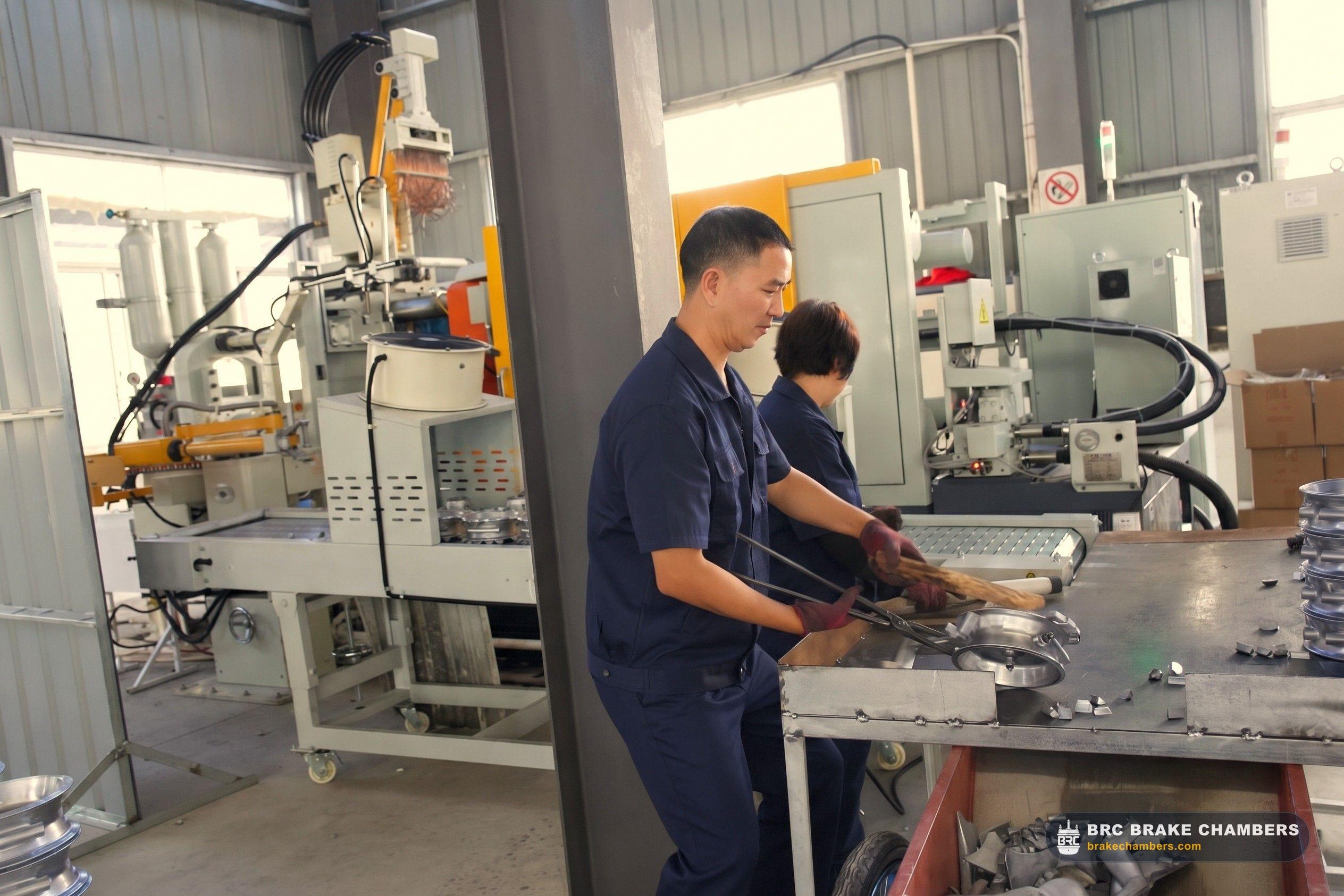
Rapid Prototyping
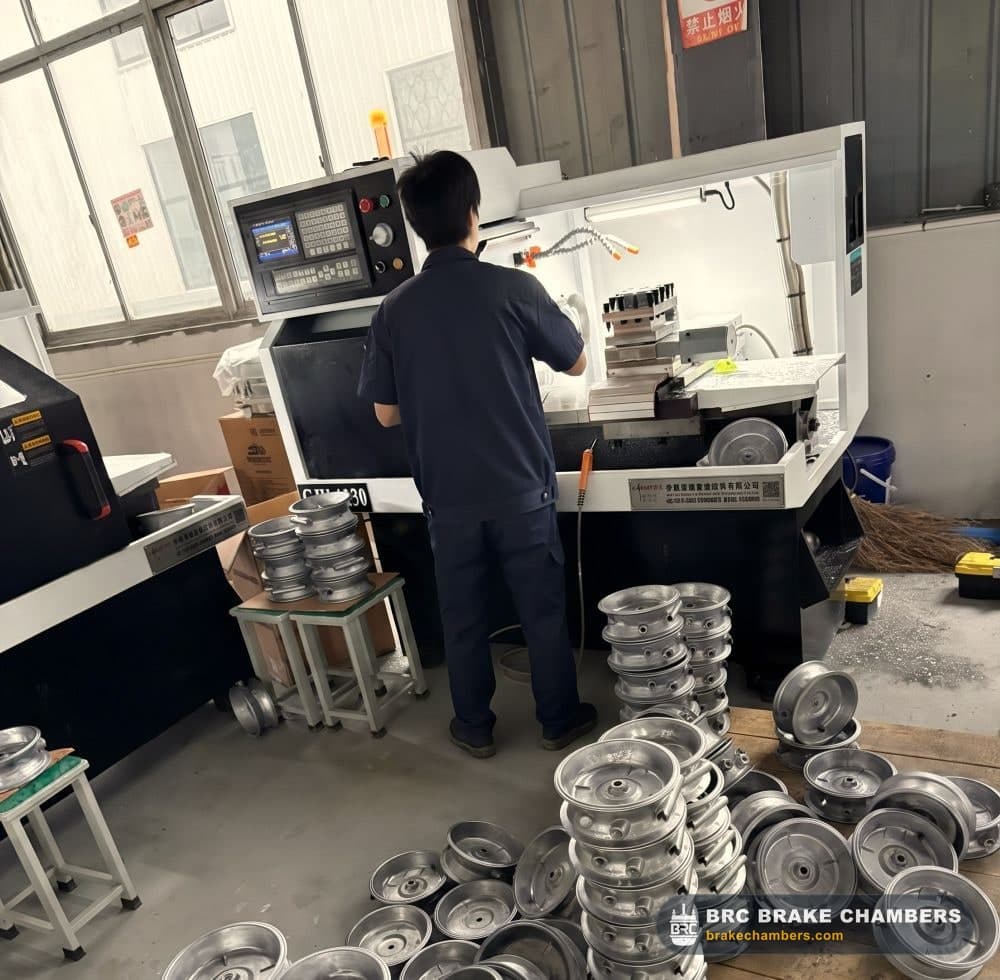
Once the digital design passes FEA validation, BRC produces functional prototypes using 3D printing and low-volume CNC machining. Prototypes undergo bench testing before volume tooling is committed.
Simulation & Digital Prototyping
Every BRC brake chamber design is first built as a digital model in 3D CAD. Using Finite Element Analysis (FEA), we simulate pneumatic bursts, torsional vibration, and thermal shock, identifying stress points and optimizing housing geometry before any physical tooling is committed.