Brake Chamber Sizing Guide: Type 30, 24, 16 Explained
Proper brake chamber sizing is critical for safe stopping. This guide covers type designations, stroke limits, and how to cross-reference OEM part numbers.
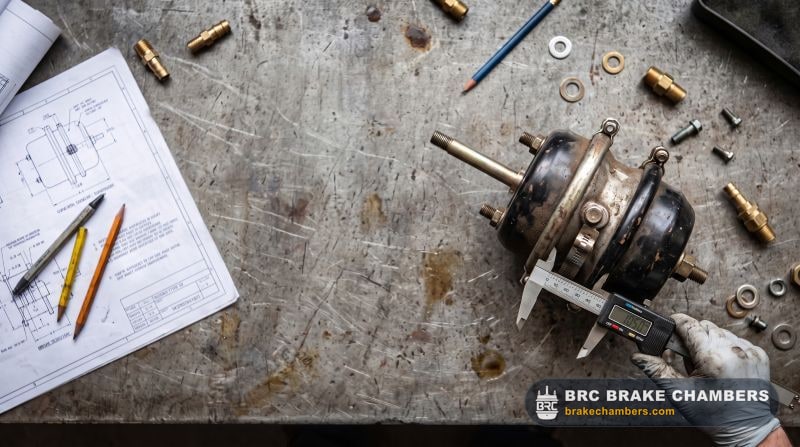
When replacing brake chambers on commercial trucks and trailers, proper sizing is critical for safe braking. An undersized chamber won't generate sufficient force, while an oversized chamber can cause brake imbalance and premature wear.
Understanding Size Designations
Brake chamber sizes are designated by their effective diaphragm area in square inches. A "Type 30" chamber has 30 square inches of effective diaphragm area. Common sizes include Type 9, 12, 16, 20, 24, 30, and 36.
The size must match the slack adjuster length, brake drum diameter, and foundation brake specification for the specific axle.
Never mix chamber sizes on the same axle. Mixing sizes causes braking imbalance that can pull the vehicle to one side during hard braking.
Stroke Length: Standard vs. Long Stroke
FMVSS-121 mandates maximum push-rod stroke limits. Long-stroke chambers provide additional reserve stroke margin, keeping the slack adjuster in the correct operating range as shoes wear down.
- Standard Type 30: Maximum rated stroke 2.5 inches. Legal readjustment limit 2.0 inches.
- Long Stroke Type 30: Maximum rated stroke 3.0 inches. Legal readjustment limit 2.5 inches.
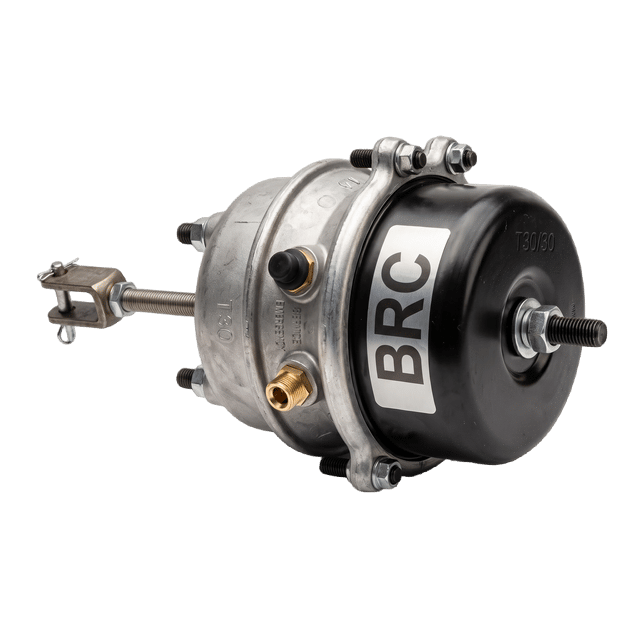
Exceeding these limits during a roadside inspection results in an out-of-service order. Always replace a long-stroke chamber with another long-stroke chamber. They are visually identifiable by square air ports or a trapezoidal ID tag.
How to Cross-Reference OEM Part Numbers
When replacing a chamber, you have two options:
Option 1: Match by Vehicle Application
Look up the correct chamber size and stroke type for your vehicle's make, model, and axle position.
Option 2: Match by OEM Part Number
If you have the original chamber's part number, use an OEM cross-reference tool to find the matching aftermarket equivalent.
Both methods work. The part number method is faster if you have the number available. The application method is more accurate if the original chamber has been substituted.
BRC provides an online cross-reference tool covering Bendix, Haldex, Meritor, WABCO, Knorr-Bremse, SORL, and MGM part numbers.
Installation Best Practices
- Use new mounting hardware and gaskets
- Torque fasteners to manufacturer specification
- Perform a full brake adjustment after chamber replacement
- Conduct a static leak test at 100 PSI for a minimum of 60 seconds
Never reuse stretched bolts or compressed gaskets because they will fail.
Summary
Correct brake chamber sizing depends on three factors:
- Matching the type number to the application
- Matching standard or long-stroke to the original configuration
- Verifying OEM cross-reference
BRC manufactures the full range of brake chambers for commercial vehicle applications. Use our cross-reference tool or contact our engineering team for sizing assistance.
Related Resources:
→ Use our OEM cross-reference tool
→ View our brake chamber size charts
→ See our installation guide
Share Article
Need Technical Help?
Our engineering team is available to help you cross-reference OEM parts or select the correct chamber for your fleet.