Air Disc Brakes vs. Drum Brakes: Aftermarket Impact
The commercial vehicle braking industry is shifting from drum to air disc brakes. Here is how the transition affects brake chamber design and aftermarket sourcing.
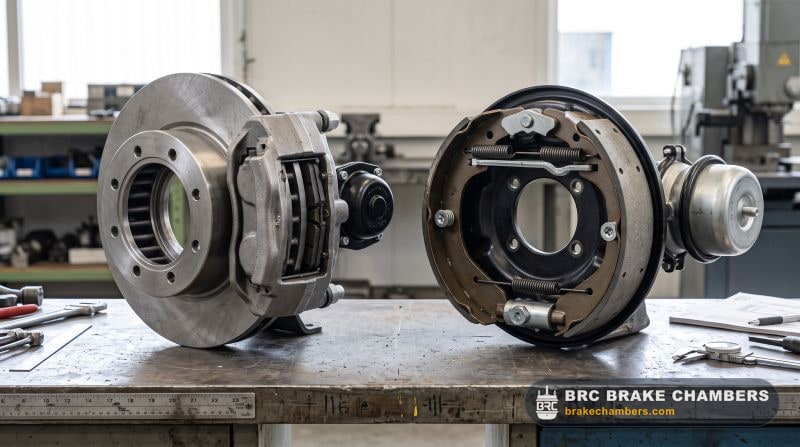
The commercial vehicle braking industry is undergoing a significant shift from traditional S-cam drum brakes to air disc brake (ADB) systems. This transition is driven by stricter stopping distance regulations and the demand for lower long-term maintenance costs.
Air Disc Brakes vs. Drum Brakes
Air disc brakes offer measurable advantages over traditional drum brakes.
Stopping Distance
ADB systems deliver more consistent stopping distance over repeated hard stops, especially when brakes are hot.
Brake Fade Reduction
Disc brakes dissipate heat more efficiently, reducing fade during sustained mountain descents.
Maintenance Cost
Pad changes on disc brakes take less time than shoe replacement on drum brakes, lowering labor costs over the life of the vehicle.
What This Means for Brake Chambers
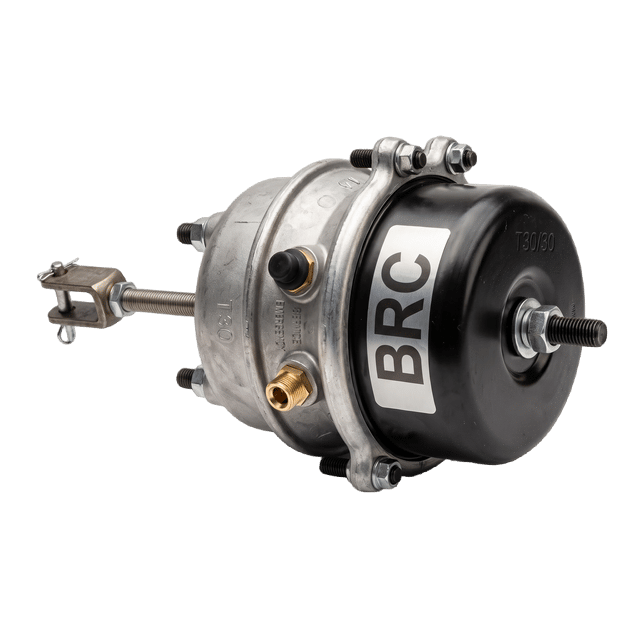
Air disc brake systems still use pneumatic actuators, but the actuator design differs significantly from traditional drum brake chambers.
Compact Design
ADB actuators are more compact than drum chambers, with tighter internal tolerances.
Sealed Construction
ADB actuators are sealed against dust and moisture to protect the internal bore.
Higher Efficiency Requirement
Because disc brakes have less mechanical advantage than S-cam systems, ADB actuators must transfer force with very high efficiency.
Different Actuation Method
Standard drum chambers push a rotating S-cam. ADB actuators push a piston or lever directly against the brake caliper.
What Fleet Managers Should Know
For fleet managers with mixed drum and disc brake vehicles:
- Chambers Are Not Interchangeable: You cannot use a drum chamber on an ADB system or vice versa.
- Maintenance Training Matters: Technicians need to be trained on both systems.
- Parts Inventory Complexity: Mixed fleets need both drum chambers and ADB actuators in stock.
- ADB Sourcing Options: Both OEM and aftermarket ADB actuators are available. Confirm specifications match the caliper system.
Electronic Braking Systems (EBS)
EBS represents the next evolution. Traditional air brake systems transmit pedal pressure pneumatically, which introduces a slight delay. EBS transmits that signal electronically, resulting in faster brake application and individual wheel-level pressure modulation.
The pneumatic actuator remains the final mechanical component doing the heavy lifting, while integration requirements and responsiveness standards continue to evolve.
Summary
For distributors and fleet managers:
- The ADB shift is real and accelerating
- Brake chambers and ADB actuators are not interchangeable
- Mixed fleets need both product types stocked
- Sourcing strategy should cover both categories
BRC manufactures both drum brake chambers and air disc brake actuators for commercial vehicle applications. Contact our engineering team to discuss your fleet mix.
Related Resources:
→ View our spring brake chambers
→ View our air disc brake actuators
→ Read our brake chamber sizing guide
Share Article
Need Technical Help?
Our engineering team is available to help you cross-reference OEM parts or select the correct chamber for your fleet.