How to Diagnose Air Leaks in Spring Brake Chambers
A step-by-step field guide to identifying, isolating, and repairing the most common air leak failures that lead to DOT out-of-service violations.
Air leaks in spring brake chambers are one of the most common reasons for DOT roadside inspection failures in the United States. Most air leaks are straightforward to diagnose once you know where to look.
Step 1: Identify the Leak Source
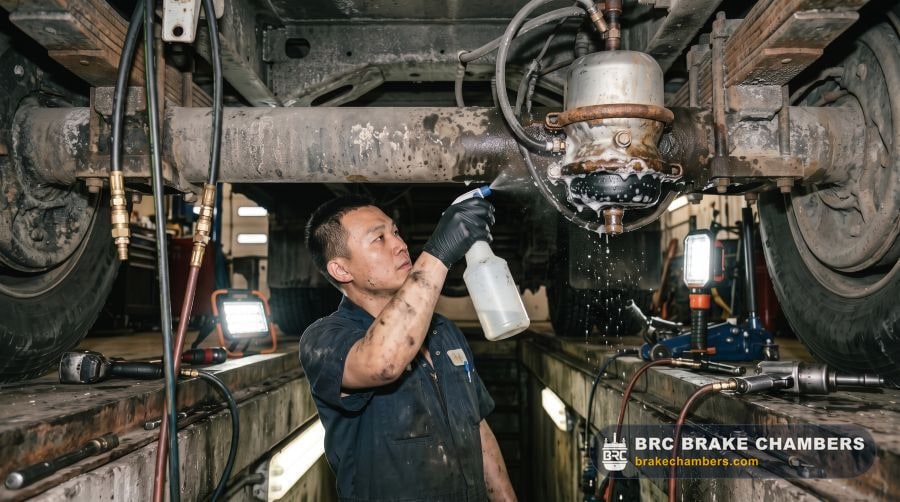
Start by chocking the wheels and releasing the parking brake. Then apply the brakes fully and listen for hissing at each chamber. Use a spray bottle of soapy water around the clamp ring, air fittings, and push-rod boot to pinpoint leaks through bubble formation.
Leak at the Exhaust Port
Usually indicates a ruptured diaphragm or a failing internal seal in the brake valve.
Leak at the Clamp Ring
Indicates the seal between the diaphragm and the housing halves is compromised.
Leak Around the Push-Rod
Suggests the center seal between the parking and service sections has failed.
Step 2: Check the Diaphragm
The rubber diaphragm is the most common failure point. Exposure to road salt, petroleum contaminants from the air compressor, and temperature extremes causes cracks and porosity over time. If the diaphragm is leaking, replace the chamber immediately. Do not attempt to patch a damaged diaphragm.
Step 3: Inspect the Clamp Ring
A loose or corroded clamp ring can allow air to escape between the front and rear housing halves. Torque the clamp ring bolts to manufacturer specification. Do not over-torque, as this can crush the diaphragm lip and cause a worse leak.
When to Replace vs. Repair
While piggyback kits exist to replace only the spring brake section of a combination chamber, complete chamber replacement is often safer and more cost-effective when labor hours are factored in.
If the housing shows heavy corrosion pitting, denting, or the push-rod boot is torn, complete replacement is mandatory. BRC chambers are designed as direct drop-in replacements for major OEM part numbers, making full replacement straightforward.
Safety Warning:
Never attempt to manually open or disassemble the sealed parking brake housing. It contains a heavy-duty power spring compressed under thousands of pounds of force. Disassembly can cause catastrophic injury or death.
Summary
Most air leaks are diagnosed quickly with the right approach:
- Isolate the leak with soapy water
- Identify the source: diaphragm, clamp ring, or center seal
- Replace the chamber when the diaphragm or center seal has failed
BRC manufactures replacement brake chambers and full repair kits for commercial vehicles. Order evaluation samples to verify fitment on your fleet.
Related Resources:
→ View our spring brake chambers
→ See our brake chamber parts & kits
→ Read our brake chamber caging guide
Share Article
Need Technical Help?
Our engineering team is available to help you cross-reference OEM parts or select the correct chamber for your fleet.